
Afsana Chowdhury | September 20, 2025 | Child Custody

If you are facing a divorce or custody matter, you may be wondering what a custodial parent is and why it matters. The term is commonly used in family law to describe the parent with primary physical custody of the child. In other words, the child lives with this parent most of the time.
The other parent, often called the noncustodial parent, may still have visitation rights and shared legal responsibilities. Understanding what it means to be a custodial parent can help you prepare for court proceedings, protect your parental rights, and meet your child’s needs.
Legal Custody vs. Physical Custody
When determining custody, courts divide parental rights into two categories:
- Legal custody: The authority to make major decisions about the child’s education, medical care, and religious upbringing
- Physical custody: Where the child lives and which parent provides day-to-day care
A custodial parent has physical custody, meaning the child resides with them most of the time. Parents often share legal custody even if only one is designated as the custodial parent.
Knowing the difference between legal and physical custody helps parents understand their roles and responsibilities.
How Courts Decide Custodial Parenting
Courts make custody decisions based on the best interests of the child.
Factors commonly considered include:
- The child’s age and developmental needs
- Each parent’s ability to provide a stable home environment
- The child’s relationship with each parent
- Any history of domestic violence or substance abuse
- The physical and mental health of the parents
No single factor decides the outcome. Judges weigh all circumstances before determining which parent will be the custodial parent.
These considerations show that custody decisions are centered on protecting the child’s well-being, not simply favoring one parent over the other.
Rights and Responsibilities of a Custodial Parent
Being a custodial parent comes with specific rights and obligations.
These typically include:
- Providing a safe and stable home for the child
- Meeting daily needs such as food, clothing, and medical care
- Ensuring the child attends school and receives an appropriate education
- Facilitating visitation with the noncustodial parent when ordered by the court
- Communicating with the other parent about important issues when legal custody is shared
Fulfilling these responsibilities is not optional. Courts expect custodial parents to uphold their duties in the child’s best interest.
What Role Does the Noncustodial Parent Play?
Noncustodial parents are still vital in their child’s life. They may have visitation rights, also known as parenting time, which allow them to spend scheduled time with the child. In many cases, they also contribute to the child’s support through court-ordered child support payments.
Visitation schedules can vary, ranging from weekends and holidays to extended summer visits. Courts encourage both parents to remain active in their child’s life whenever possible.
Why Custodial Status Matters
Custodial status impacts more than where the child lives, and can affect:
- Eligibility for child support
- Who claims the child as a dependent for tax purposes
- School enrollment decisions
- Relocation requests if the custodial parent wishes to move to another city or state
Understanding these implications can help parents avoid legal conflicts and ensure compliance with court orders.
Custodial Parents
A custodial parent is the parent who provides the child’s primary residence, takes on daily care responsibilities, and often shares legal custody with the other parent. Courts grant this role based on the child’s best interests, considering many factors about stability, safety, and parental involvement.
Although both parents should work together in the best interests of the child, custodial parents often carry a higher burden. Knowing what custodial status means helps both parents navigate family law disputes and remain focused on their child’s needs.
Contact the Fairfax Child Custody Lawyers at Chowdhury Divorce Law Group for Help Today
If you’re working through a custody matter, Chowdhury Divorce Law Group is here to help. Our team has over a decade of experience protecting our clients’ rights. Contact us today for an initial consultation with a Fairfax child custody attorney.
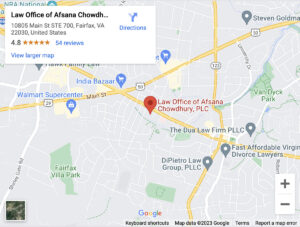
For more information, please contact an experienced child custody lawyer at Chowdhury Divorce Law Group to schedule an initial consultation today. Our law office is located in Fairfax, VA.
We proudly serve in Fairfax County and its surrounding areas:
Chowdhury Divorce Law Group
10805 Main St STE 700A
Fairfax, VA 22030
(703) 271-6519
Our firm is located near you. We have an office in Fairfax
Find us with our GeoCoordinates: 38.8497929, -77.3185772,3047

About The Author

Afsana Chowdhury is the founder of Chowdhury Divorce Law Group, where she is dedicated to protecting the rights of injury victims across Virginia. A George Mason University School of Law graduate, Afsana is licensed to practice in Virginia and has devoted her legal career to personal injury law. She focuses on helping clients, guiding them through divorce, custody disputes, and other complex family matters. With years of experience and a deep commitment to protecting her clients’ rights, she personally handles each case to ensure strong, focused representation.
Location: Fairfax, VA