
Afsana Chowdhury | December 26, 2025 | Divorce

Divorce affects more than just parents. It often has a direct impact on children, including those already in college. Many families do not fully understand how divorce impacts college students at George Mason University in Fairfax, VA, until problems begin to show up in school, finances, or mental health. College students rely on routine and support, and divorce can disrupt both.
Students at George Mason University are balancing classes, jobs, internships, and social life. When divorce enters the picture, it can make daily responsibilities more challenging to manage and increase stress during an already demanding time. Keep reading to learn more about how divorce impacts college students at George Mason University in Fairfax, VA.
Emotional Stress College Students Often Face
Even when parents try to limit conflict, divorce can still be stressful for college students. Many feel caught between parents or feel pressure to take sides. Others worry about family stability while trying to focus on school.
Common emotional challenges include:
- Anxiety about family changes
- Trouble concentrating on coursework
- Feelings of sadness, anger, or confusion
- Pulling away from friends or activities
- Feeling overwhelmed or burned out
Students who live away from home may feel guilty for not being present, while those who live at home may feel surrounded by conflict. Without support, emotional stress can affect both their grades and their health.
Financial Changes That Affect College Life
Divorce often affects a family’s finances, and college students feel the impact quickly. Tuition, housing, and basic living costs may become harder to cover after a household splits into two.
Financial issues may include:
- Difficulty paying tuition or school fees
- Less help with rent, food, or transportation
- Changes to financial aid eligibility
- Taking on more student loans
- Working longer hours during the school year
At George Mason University, many students already work while attending classes. Additional financial pressure can make it more challenging to keep up with schoolwork, which can delay graduation.
Impact on Academic Performance
Stress from divorce often shows up in academic performance. When students are distracted by family issues or financial worries, their efforts at school can suffer.
Academic struggles may involve:
- Lower grades
- Missed deadlines
- Skipping classes
- Difficulty planning future semesters
- Loss of interest in school activities
Without support, small academic issues can grow into larger problems. Early help from advisors or counselors can make a difference.
Housing and Living Stability
Divorce can also affect where a college student lives. Some students may need to move between parents’ homes, while others lose financial support for housing.
Housing challenges may include:
- Losing a stable place to live
- Longer travel time to campus
- Trouble affording off-campus housing
- Moving during the school year
Unstable housing can affect sleep, study time, and overall well-being, making it harder to succeed in school.
Legal and Financial Uncertainty
Although college students are considered adults, divorce decisions can still impact them. Parents may disagree about who pays tuition, who claims the student as a dependent on taxes, or who provides health insurance.
These issues often cause:
- Confusion about financial support
- Delays in paying school expenses
- Stress over medical or insurance coverage
- Uncertainty about long-term planning
Clear planning and communication can help reduce confusion.
Steps Students Can Take to Protect Themselves
College students affected by divorce can take steps to stay on track during times of family change.
Helpful actions include:
- Talking with academic advisors early
- Reviewing financial aid options
- Using campus counseling services
- Setting boundaries around family conflict
- Keeping track of financial changes
George Mason University offers student support resources, but students usually need to reach out first. Taking action early can prevent larger problems later.
Contact Our Fairfax Divorce Lawyers at Chowdhury Divorce Law for a Confidential Consultation
Divorce can have a profound impact on a college student’s emotions, finances, and academic pursuits. With support and planning, students at George Mason University can continue their education and stay focused during a difficult family transition.
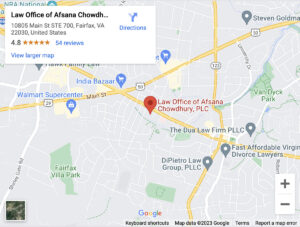
For more information, please contact an experienced divorce lawyer at Chowdhury Divorce Law Group to schedule an initial consultation today. Our law office is located in Fairfax, VA.
We proudly serve in Fairfax County and its surrounding areas:
Chowdhury Divorce Law Group
10805 Main St STE 700A
Fairfax, VA 22030
(703) 271-6519
Our firm is located near you. We have an office in Fairfax
Find us with our GeoCoordinates: 38.8497929, -77.3185772,3047

About The Author

Afsana Chowdhury is the founder of Chowdhury Divorce Law Group, where she is dedicated to protecting the rights of injury victims across Virginia. A George Mason University School of Law graduate, Afsana is licensed to practice in Virginia and has devoted her legal career to personal injury law. She focuses on helping clients, guiding them through divorce, custody disputes, and other complex family matters. With years of experience and a deep commitment to protecting her clients’ rights, she personally handles each case to ensure strong, focused representation.
Location: Fairfax, VA
For more information, please contact an experienced divorce lawyer at Chowdhury Divorce Law Group to schedule an initial consultation today. Our law office is located in Fairfax, VA.
We proudly serve Fairfax, VA, and its surrounding areas
Chowdhury Divorce Law Group
10805 Main St STE 700A, Fairfax, VA 22030
(703) 271-6519